

Why Using Authentic Sicilian Flour Will Change the Way You Bake Pizza
Buongiorno! If you’ve ever stepped into Castanea Sicilian Cafe, you know the smell. It’s that intoxicating, warm aroma of bread and toasted grain that hits you before you even see the counter. It’s the scent of our heritage.
Whenever people sit down to enjoy a slice of our pizza or a piece of our focaccia, the first thing they notice isn't the cheese or the sauce, though those are spectacular, if I do say so myself. It’s the crust. It’s got a specific crunch, a deep golden color, and a flavor that tastes like the sun-drenched fields of Sicily.
The secret? It’s not just in the hands that knead it. It’s in the farina. The flour.
If you’ve been using standard all-purpose flour from the local grocery store for your homemade pizza nights, you're missing out on a world of flavor. Today, I want to take you on a little journey across the Mediterranean to explain why authentic Sicilian flour is the game-changer your kitchen has been waiting for.
The Soul of the Sicilian Soil
To understand Sicilian flour, you have to understand the island. Sicily has been called the "granary of Rome" since ancient times. The volcanic soil around Mt. Etna, combined with the relentless Mediterranean sun and the salty sea breeze, creates a microclimate that is perfect for growing wheat.
But we’re not talking about just any wheat. We’re talking about Grani Antichi Siciliani, Ancient Sicilian Grains.
For decades, the world moved toward industrialized, highly processed white flour. It was easy to work with, sure, but it lost its soul along the way. In Sicily, we’ve fought to preserve our heritage grains like Russello, Timilia, and Maiorca. These aren't just names; they are the flavors of our ancestors.

A dough, light and resilient. A crust that tells a story. When you use flour milled from these ancient grains, you aren't just making a base for toppings; you are creating the star of the show.
Why the Protein Matters (The Science Part)
In the world of pizza, protein is king. Now, I’m not a scientist, I’m a baker and a cafe owner, but I know what works.
Authentic Sicilian pizza, especially the thick, pillowy Sfincione style we love so much, requires a flour with a higher protein content, typically between 13% and 14.5%. This is the "muscle" of the dough. This protein creates a strong gluten network that can hold onto the gases produced during fermentation.
The result? A pizza that rises beautifully, creating those big, airy pockets (what we call the alveolatura) inside a thick, focaccia-like crust. If you use a weak flour, your pizza will be heavy, dense, and, dare I say it, a bit boring.
By choosing a high-protein Sicilian flour, you’re giving your dough the strength to withstand a long, slow fermentation. At Castanea, we’re big believers in patience. A 24-hour or even 48-hour cold ferment allows the enzymes to break down the starches, making the crust not only more flavorful but much easier to digest. No more feeling weighed down after a couple of slices!
Savoring the Sun: The Flavor Profile
Have you ever noticed that most commercial pizza crusts taste like... well, nothing? They’re just a delivery vehicle for pepperoni.
Authentic Sicilian flour changes that. Because these grains are often stone-ground and less processed, they retain the germ and the bran: the parts of the wheat where the flavor lives.
- Earthiness: You’ll notice a distinct nuttiness, almost like toasted almonds.
- Sweetness: There’s a natural, subtle sweetness that balances the acidity of a San Marzano tomato sauce.
- Color: Your crust won't be pale and ghostly. It will bake into a rich, rustic gold that looks as good as it tastes.

A selection of grains and freshly milled flour, showcasing the rustic texture.
The Sfincione Tradition
In Palermo, pizza isn’t a thin, floppy triangle. It’s Sfincione. It’s thick, rectangular, and topped with a rich tomato sauce, onions, anchovies, oregano, and a dusting of caciocavallo cheese.
The foundation of a great Sfincione is the flour. It needs to be sturdy enough to support those heavy toppings but light enough to stay airy. When you use authentic Sicilian flour, you get that legendary "crunch-soft" contrast. The bottom of the pizza fries slightly in the olive oil of the pan, creating a crispy golden "fried" texture, while the middle stays as soft as a cloud.
This is the kind of baking that brings families together. It’s the kind of food that makes you slow down and appreciate the moment. Il dolce far niente: the sweetness of doing nothing: is much easier to achieve when you have a tray of authentic Sicilian pizza in front of you.
Bringing the Bakery Home
I know what you’re thinking: "Nando, this sounds great, but I live thousands of miles from Sicily. Where am I going to get this flour?"
That’s exactly why we started our online grocery store. We wanted to bridge the gap between our little cafe and your home kitchen. We source the same ingredients we use in our own ovens: the stuff that’s imported directly from Italy.
Whether it’s the perfect flour, the Casa Milo rigatoni for your Sunday pasta, or our favorite Sicilian chili olive oil, we’ve curated a selection that meets our standards.
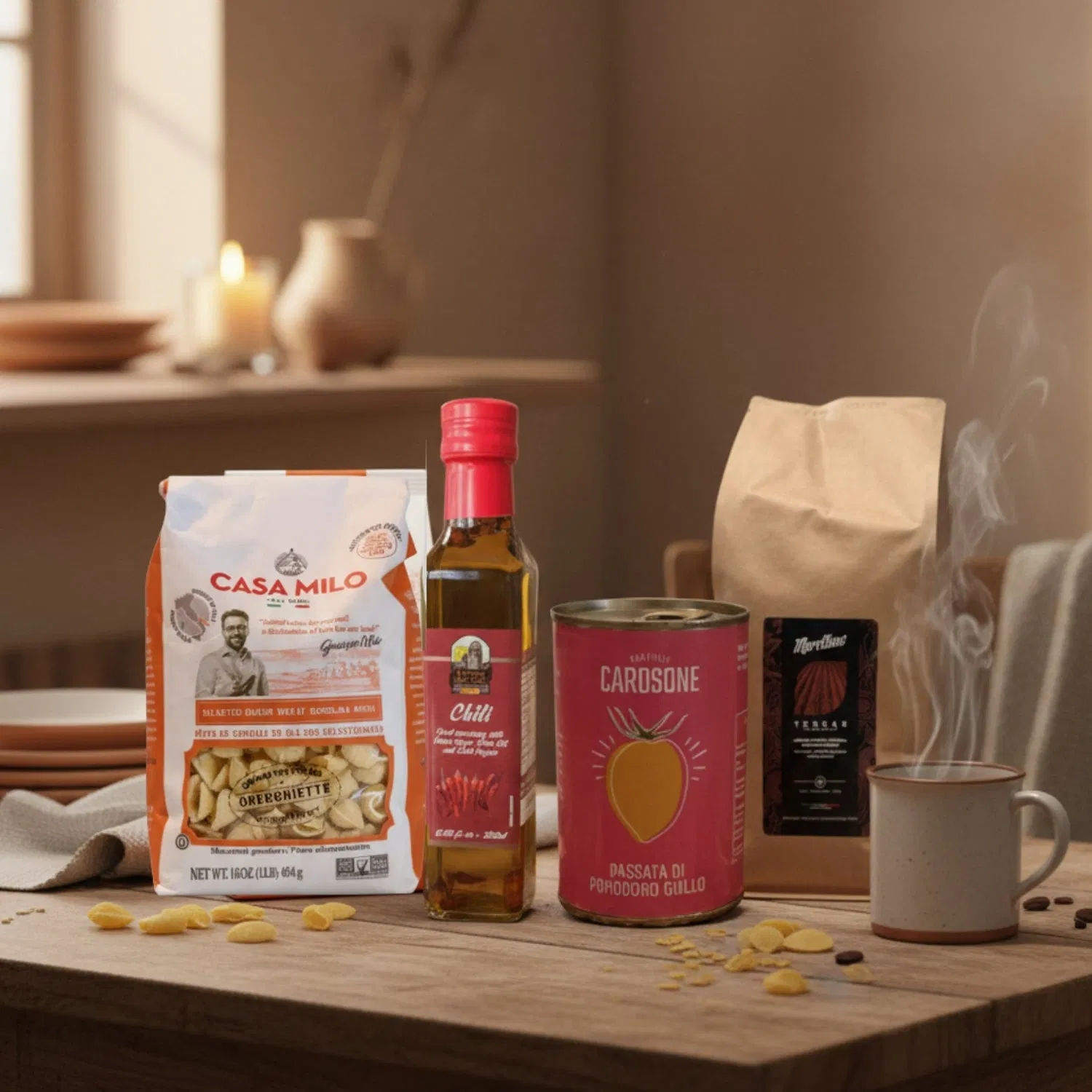
Using the right ingredients is the difference between "good" and "unforgettable." When you start with the right flour, you’re already halfway to a masterpiece.
Nando’s Tips for Your Best Pizza Ever
If you’re ready to take the plunge and try baking with authentic Sicilian flour, here are a few tips from our kitchen to yours:
- Hydration is Key: Sicilian flours, especially the ancient varieties, love water. Don't be afraid of a wetter dough. It might be a bit sticky to handle at first, but that high hydration is what gives you the light, airy interior.
- Respect the Rise: Don't rush it. Give your dough at least 24 hours in the fridge. The flavor develops over time, and the texture becomes much more sophisticated.
- The Olive Oil Trick: When baking Sicilian style in a pan, be generous with the extra virgin olive oil in the bottom of the tray. It essentially "confits" the bottom of the crust, giving it an incredible crunch.
- Parbake for Success: If you’re making a thick-crust pizza, try baking the dough with just a little sauce for about 8-10 minutes before adding the rest of your toppings. This ensures the middle is perfectly cooked and never gummy.
In a Chestnutshell
At Castanea Sicilian Cafe, we believe that food is a love letter to our roots. Every bag of flour we open and every dough we knead is a way of keeping the Sicilian spirit alive.
Switching to authentic Sicilian flour isn't just a culinary choice; it's an invitation to experience pizza the way it was meant to be: rich, flavorful, and deeply satisfying. It transforms your home kitchen into a panificio in the heart of Palermo.

A close-up of a finished Sicilian pizza slice, showing the airy "alveolatura" and golden crust.
Ready to start your journey? Check out our full menu for inspiration, or head over to our store to stock your pantry with the real deal. Your pizza: and your family: will thank you.
Grazie for being part of our community. We can't wait to see what you bake!
Warmly,
Nando Benincasa
CEO & Founder, Castanea Sicilian Cafe
For more recipes and stories from our kitchen, visit us at www.castaneacafe.com.
